
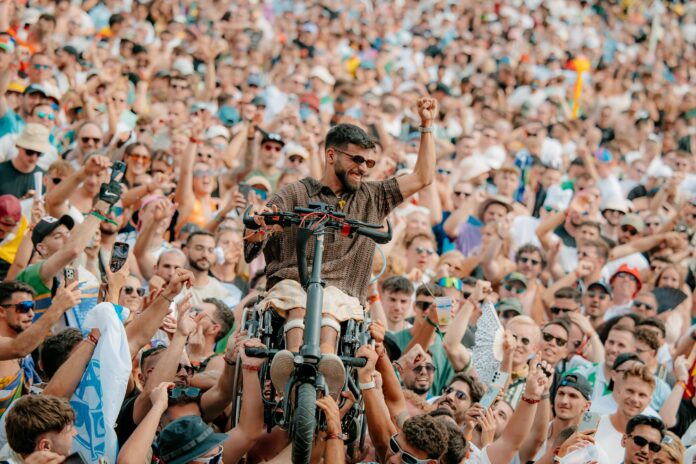

For years, going to a music festival alone was seen as a last resort rather than a valid choice. Festivals were marketed as group experiences built around shared excitement, collective planning, and tight-knit crews moving from stage to stage. In 2026, that perception is quietly but decisively changing. A growing number of festivalgoers are choosing to attend events solo, not because they have no alternative, but because they actively prefer the experience.
A close look at discussions across festival communities shows how common solo attendance has become. Questions about attending Electric Forest, HIVE Festival, Ciroloco, or Lollapalooza alone now appear almost daily. What stands out is not fear of the music or the crowd, but anxiety around social expectations. Many first-time solo attendees worry about safety, loneliness, or standing out, even though festivals themselves are designed as shared public spaces.
The shift toward solo festival attendance reflects broader changes in how people relate to live music and social life. Modern festivalgoers are less willing to skip events they care about simply because their friends are unavailable. Conflicting schedules, financial priorities, and differing musical tastes mean that waiting for the “perfect group” often results in not going at all. For many, attending alone becomes an act of independence rather than compromise.
There is also a psychological dimension to the appeal. Solo attendees consistently report a greater sense of freedom. Without group negotiations, compromises, or pressure to stay together, individuals can follow their own rhythm, discover new artists, take breaks when needed, and leave stages without explanation. This autonomy often leads to deeper musical engagement and a more personal connection to the event.
Interestingly, solo attendance does not necessarily mean isolation. Many festivalgoers describe it as easier to meet people when alone, as conversations feel more organic and less transactional. Temporary connections form naturally in crowds, queues, and chill-out zones, without the obligation to maintain them beyond the moment. This low-pressure social environment aligns well with a generation increasingly selective about how and when they socialize.
Safety remains a central concern, especially for first-time solo attendees, but experienced festivalgoers note that awareness and preparation matter more than group size. Choosing well-lit routes, pacing alcohol or substance use responsibly, and staying connected digitally provide reassurance. As festivals invest more in infrastructure, lighting, signage, and staff presence, the perceived risk of attending alone continues to decrease.
The rise of solo festival attendance also signals a shift in festival culture itself. Events are no longer judged solely on their ability to facilitate mass euphoria, but on how inclusive and navigable they are for different types of attendees. Clear schedules, intuitive layouts, accessible transportation, and dedicated chill spaces all contribute to making solo participation more comfortable.
In 2026, going to a festival alone is no longer an exception or a bold statement. It is becoming a normalized, intentional way of experiencing live music. As audiences grow more self-aware and selective about how they spend their time and energy, solo attendance represents a broader cultural move toward autonomy, presence, and personal meaning within the festival landscape.